
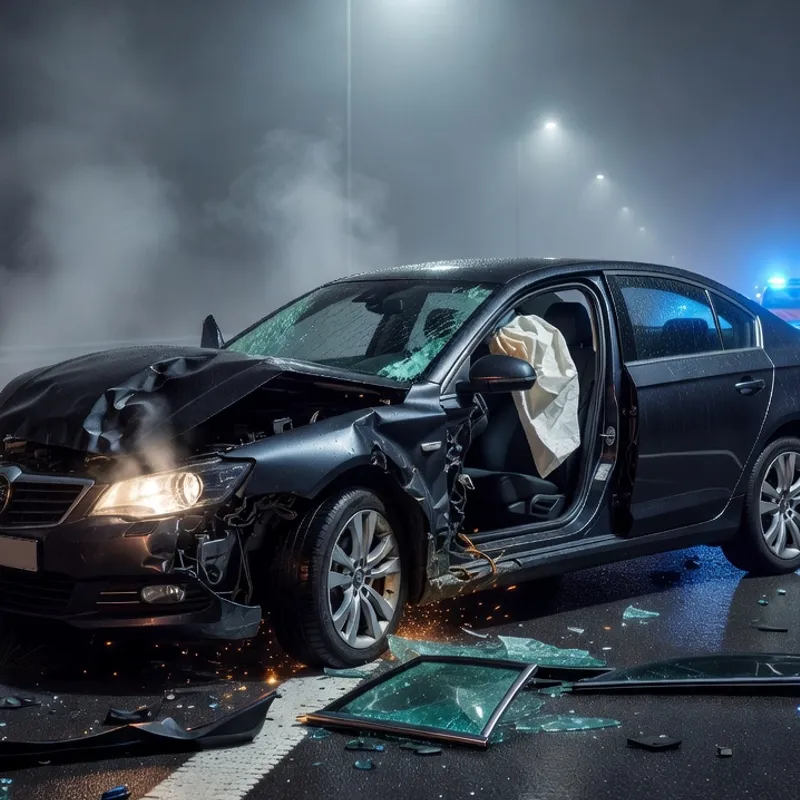
Article 6 Dutch Road Traffic Act (WVW) and personal injury plays a central role in serious traffic accidents. When someone seriously injures or kills another through their driving behavior, not only civil liability may arise, but also criminal prosecution. Yet in practice, there is much uncertainty about the meaning of Article 6 WVW and the consequences for victims.
In this article, we explain in detail what Article 6 WVW entails, when there is "fault" in the criminal sense, and what this means for your personal injury claim. Furthermore, we clarify why many lawyers give up in precisely these cases — and why we do not.
What is Article 6 of the Road Traffic Act?
Article 6 WVW concerns traffic accidents in which someone dies or sustains serious bodily injury due to the fault of a driver. The article forms the criminal counterpart to civil liability.
The core of Article 6 WVW is that not every minor traffic mistake is punishable. Only when there is considerable fault can prosecution take place.
What is meant by "fault" in Article 6 WVW?
Fault within the meaning of Article 6 WVW is more than a minor lapse of attention. It concerns behavior that significantly deviates from what may be expected of a careful driver.
Examples include:
- considerably exceeding the speed limit;
- reckless driving behavior;
- running a red light;
- alcohol or drug use;
- using a phone while driving;
- dangerous overtaking maneuvers.
The more serious the driving behavior, the sooner Article 6 WVW comes into play.
Article 6 WVW versus Article 5 WVW
Article 6 WVW is often confused with Article 5 WVW. The difference is essential.
Article 5 WVW concerns dangerous or obstructive driving behavior without serious injury actually occurring. Article 6 WVW specifically requires that there is a serious consequence: serious bodily injury or death.
When is injury "serious" within the meaning of Article 6 WVW?
Not every injury is sufficient for the application of Article 6 WVW. It must concern serious bodily injury, such as:
- permanent bodily injury;
- prolonged inability to work;
- multiple bone fractures;
- brain injury;
- loss of a sense;
- serious internal injuries.
In cases of doubt, a medical assessment is often involved.
Article 6 WVW and criminal prosecution
When the Public Prosecution Service believes that Article 6 WVW has been violated, criminal prosecution may follow. This can lead to:
- community service or imprisonment;
- disqualification from driving;
- a criminal record for the offender.
For victims, the criminal process is often emotionally burdensome, but also legally relevant.
What does Article 6 WVW mean for personal injury?
A suspicion or conviction under Article 6 WVW personal injury has a major impact on civil liability. In many cases, the question of fault is then largely established.
This strengthens the victim's position in recovering damages.
Can personal injury also be recovered without a conviction?
Yes. Civil liability is separate from criminal conviction. Even if Article 6 WVW is not proven, liability may still exist.
Insurers sometimes suggest otherwise, but this is legally incorrect.
Article 6 WVW and insurers
Insurers closely follow criminal cases concerning Article 6 WVW. At the same time, we see that they still try to limit liability by:
- invoking contributory negligence;
- downplaying the injury;
- disputing causation;
- conducting prolonged discussions.
It is precisely at this point that many legal representatives give up.
Where other lawyers stop
Article 6 WVW cases are complex. They touch on criminal law, civil law, and insurance law. That deters many firms.
At Arslan Advocaten, this is precisely our strength. We combine personal injury expertise with insurance law and extensive litigation experience.
Out of court when possible
When insurers are willing to engage in serious settlement, we try to resolve cases out of court. A criminal file can be very persuasive in this regard.
Litigation when necessary
If negotiations do not lead to results, we litigate. Consider:
- preliminary relief proceedings on liability;
- full proceedings on the merits regarding compensation;
- preliminary expert reports;
- proceedings on medical causation.
It is precisely this approach that makes the difference in serious traffic cases.
Article 6 WVW and medical causation
Even in serious accidents, insurers regularly dispute the connection between the accident and the complaints. We are not deterred by this.
Read more on our page medical causation in personal injury.
What compensation can you claim?
In Article 6 WVW personal injury cases, the damages can be substantial.
Material damages
- medical and rehabilitation costs;
- costs for care and household help;
- travel expenses;
- home adaptations;
- aids and devices.
Loss of income
Are you unable to work? Then loss of earning capacity can be claimed.
Non-material damages
In addition, there is a right to pain and suffering compensation. Read more on our page non-material damages.
External references (legal context)
For insight into insurance practice and expertise in traffic cases, reference is often made to the Dutch Association of Insurers and expert organizations such as NIVRE.
Does legal assistance cost me money?
In personal injury cases, the costs of legal assistance and proceedings are in most cases recovered from the liable insurer. This also applies in serious cases under Article 6 WVW.
Why choose Arslan Advocaten?
We not only handle personal injury cases, but also litigate in insurance law. That combination is unique.
Where other lawyers and legal professionals give up with Article 6 WVW personal injury, we continue. Out of court when possible. Through the courts when necessary.
Have you sustained injuries in a serious traffic accident and does Article 6 WVW play a role? Please feel free to contact us for a substantive assessment.