
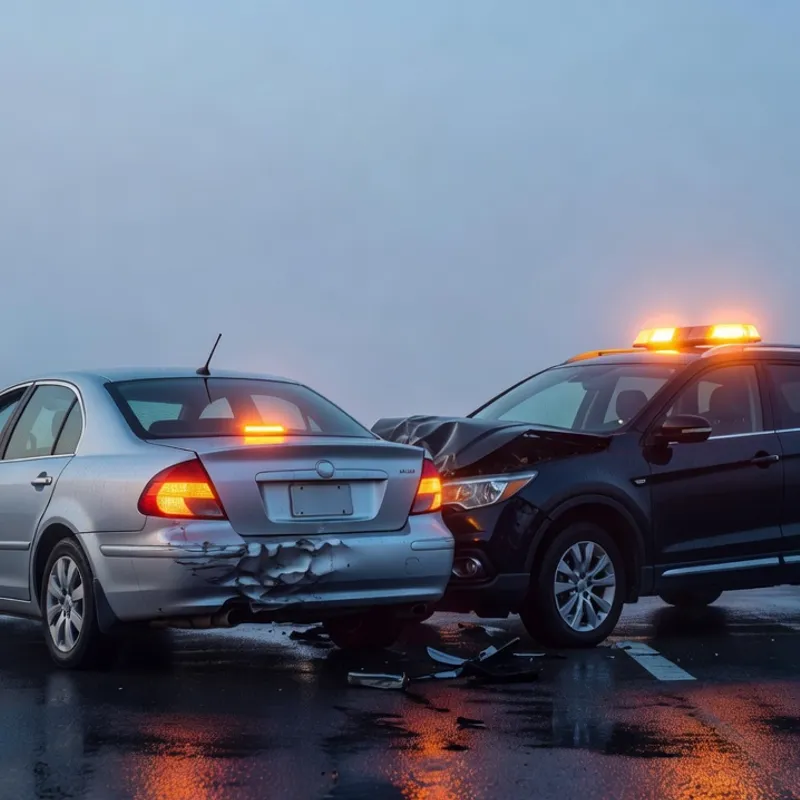
Have you been involved in a rear-end collision (also called a rear-end collision)? Then the question immediately arises: who is liable and am I entitled to compensation? In most cases the answer is clear, but there are exceptions. In this article we explain in a clear and practical manner what the legal situation is and what you must do.
What is a rear-end collision?
A rear-end collision occurs when a vehicle collides from behind into your car, scooter or bicycle. This often happens in the event of:
sudden braking
traffic jams or traffic lights
inattention or too little distance
Legally, an important main rule applies.
Who is liable in the event of a rear-end collision?
Main rule: the driver behind is liable
In in the vast majority of cases the driver riding behind is liable. The reason:
you must keep sufficient distance
you must be able to anticipate braking
The insurer of the rider behind you will usually admit liability.
Are there exceptions?
Yes, but they are limited. Liability may be (partly) different if: You brake suddenly and hard without reason Your brake lights did not work You drove backwards There was intent or dangerous driving Even then this does not automatically mean that you are not entitled to compensation. Often a large part of the damage remains reimbursable.
What damage can you be compensated for?
After a rear-end collision, the damage can go further than just damage to the body.
1. Medical costs
GP, physiotherapy, specialist
deductible
medication
2. Loss of income
missed working days
reduced income
loss of earning capacity (also for self-employed people)
3. Other costs
travel costs
domestic help
help from family (informal care)
4. Compensation for damages
For complaints such as:
neck and back problems
headache
concentration problems
may entitle you to punishment for pain and loss of enjoyment of life.
Whiplash after rear-end collision
In the event of a rear-end collision, whiplash injury is relatively common. Characteristic:
complaints sometimes only arise days later
medical scans do not always show abnormalities
insurers are often critical
Careful file compilation is essential, especially with this type of injury.
What should you do immediately after a rear-end collision?
Search medical assistance, even for minor complaints
Record the circumstances (photos, witnesses)
Report the accident as soon as possible
Keep track of complaints in a diary
Do not agree too quickly to proposals from the insurer
A quick settlement can be disadvantageous if complaints worsen later.
Insurer makes a proposal? Be careful
Insurers sometimes try to settle cases quickly. Please note:
Future damage is often underestimated
Medical end state has not yet been reached
A settlement agreement is almost always final
Do not sign anything without legal advice.
Why hire a personal injury lawyer?
A personal injury lawyer:
determines liability
calculates all damages (now and future)
engages medical and financial experts
negotiates with the insurer
prevents underestimation of your damage
👉 The costs of legal assistance in personal injury cases are recovered from the liable party. This is free of charge for you.
Conclusion: rear-end collision
✔ In most cases, the rider behind you is liable
✔ Even in the case of exceptions, there is often a right to (partial) compensation
✔ Injury can worsen later
✔ Legal guidance prevents mistakes
Have you been hit from behind? Have your situation assessed in a timely manner.